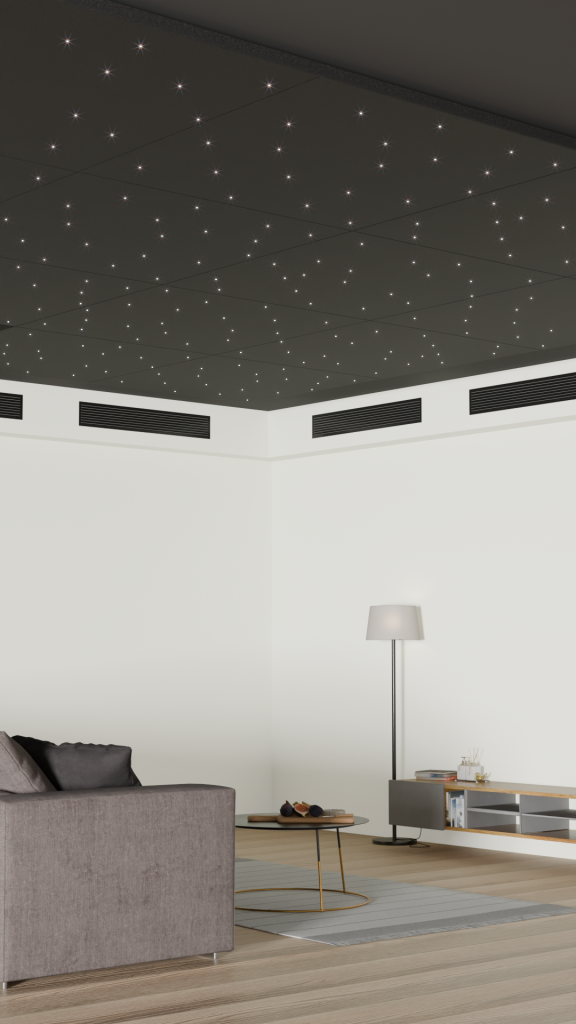
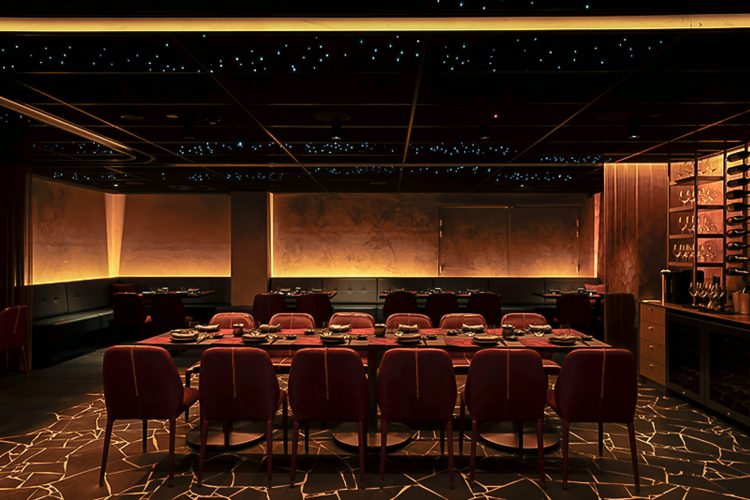
A fibre optic star ceiling transforms any ceiling into a realistic night sky, with hundreds or thousands of tiny points of light that twinkle, change colour, and create an immersive atmosphere. They are used in home theatres, bedrooms, commercial spaces, healthcare facilities, and sensory rooms across Australia and internationally.
Unlike LED alternatives or glow-in-the-dark stickers, fibre optic star ceilings produce real light, with no electricity at the light point, no heat, and no UV radiation. This makes them inherently safe for wet areas, children’s rooms, and clinical environments where electrical safety is a concern.

How does a fibre optic star ceiling work?
A fibre optic star ceiling has three core components:
1. The illuminator (light engine) — An LED-powered unit that generates the light. It sits in a concealed location, typically above the ceiling or in a nearby cupboard. The illuminator produces RGB colour, white light, or both, and controls twinkle effects, colour changes, and brightness. Models range from compact 3-watt units for a single room to 130-watt DMX illuminators for large commercial installations.

2. Fibre optic cable — Thin strands of PMMA (polymethyl methacrylate) plastic that carry light from the illuminator to the ceiling surface. Each strand is typically 0.50 mm to 3.00 mm in diameter. The strands are threaded through small holes drilled in the ceiling panel or plasterboard. Light travels along the cable and emits from the tip of each strand, creating a single point of light that resembles a star.
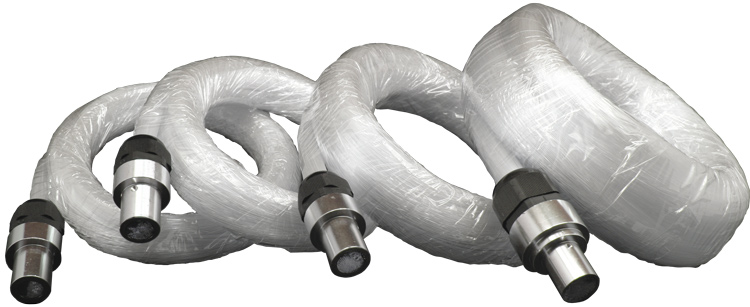
3. The ceiling surface — Either a dedicated acoustic panel (like the StarEFX PULSE) with pre-terminated fibre points, or a standard plasterboard ceiling with fibre strands threaded through during construction. Pre-made panels dramatically reduce installation time compared to custom plasterboard installations.
What are the advantages of fibre optic star ceilings?
No electricity at the light point. The only electrical component is the illuminator, which sits remotely. The fibre strands carry light, not current. This means zero electrical risk at the ceiling surface, making fibre optic star ceilings safe for bathrooms, pool areas, sensory rooms, and anywhere children or vulnerable people interact with the ceiling.
No heat. Fibre optic strands do not generate heat. The ceiling surface stays cool regardless of how long the lights run. This is critical in healthcare environments, children’s rooms, and anywhere people may touch the ceiling points.
Long lifespan. LED illuminators are rated for over 50,000 hours of operation. The fibre optic cable itself does not degrade under normal use. There are no bulbs to replace and no maintenance required beyond occasional dusting.
Colour and animation control. Modern fibre optic star ceilings support full RGB colour, tuneable white (warm to cool), twinkle effects, shooting star animations, and programmable scenes. Many systems are controlled via smartphone app, Wi-Fi remote, or building automation integration.
Acoustic performance. When combined with acoustic panels, star ceilings can provide sound absorption alongside the visual effect. The StarEFX PULSE panel, for example, delivers a weighted sound absorption coefficient of aw 0.25 while housing 40 individually addressable fibre optic points per panel.
Where are fibre optic star ceilings used?
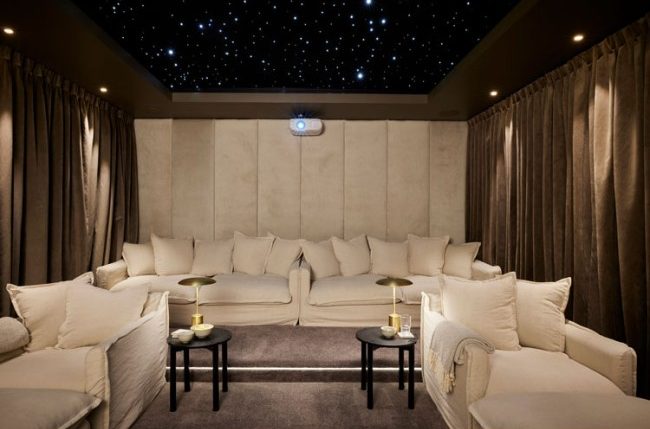
Home theatres and media rooms. The most popular residential application. A star ceiling combined with acoustic panels creates an immersive cinematic experience with controlled ambient lighting and sound treatment in a single ceiling system.
Bedrooms and nurseries. Gentle twinkling stars provide calming ambient light for sleep. The absence of electrical current at the ceiling makes them safe for children’s rooms. Tuneable white modes support circadian rhythm by shifting from warm to cool throughout the day.
Sensory rooms. Fibre optic star ceilings are a core component of therapeutic sensory environments for autism, ADHD, dementia care, and paediatric facilities. The soft, controllable light provides visual stimulation without overstimulation. Fibre strands can also be used as tactile curtains and bundles for hands-on sensory interaction.
Healthcare facilities. Patient rooms, waiting areas, imaging suites, and recovery rooms benefit from the calming visual effect. Star ceilings reduce anxiety during procedures and create a more humane clinical environment. Fire-rated panels tested to AS ISO 9705 are available for healthcare compliance.
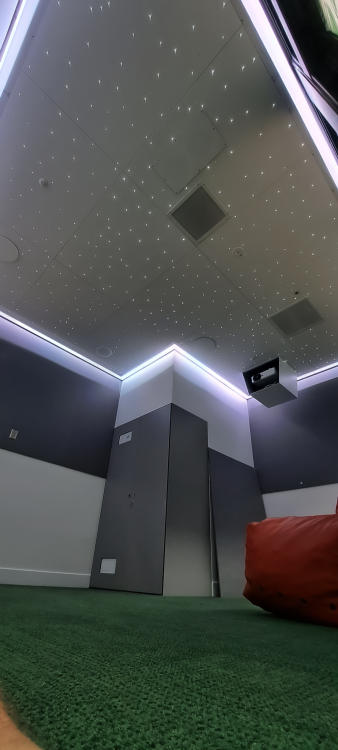
Hospitality. Hotels, restaurants, bars, and entertainment venues use star ceilings to create memorable atmosphere. Large-scale installations use panels like the StarEFX MATRIX for dramatic visual impact.
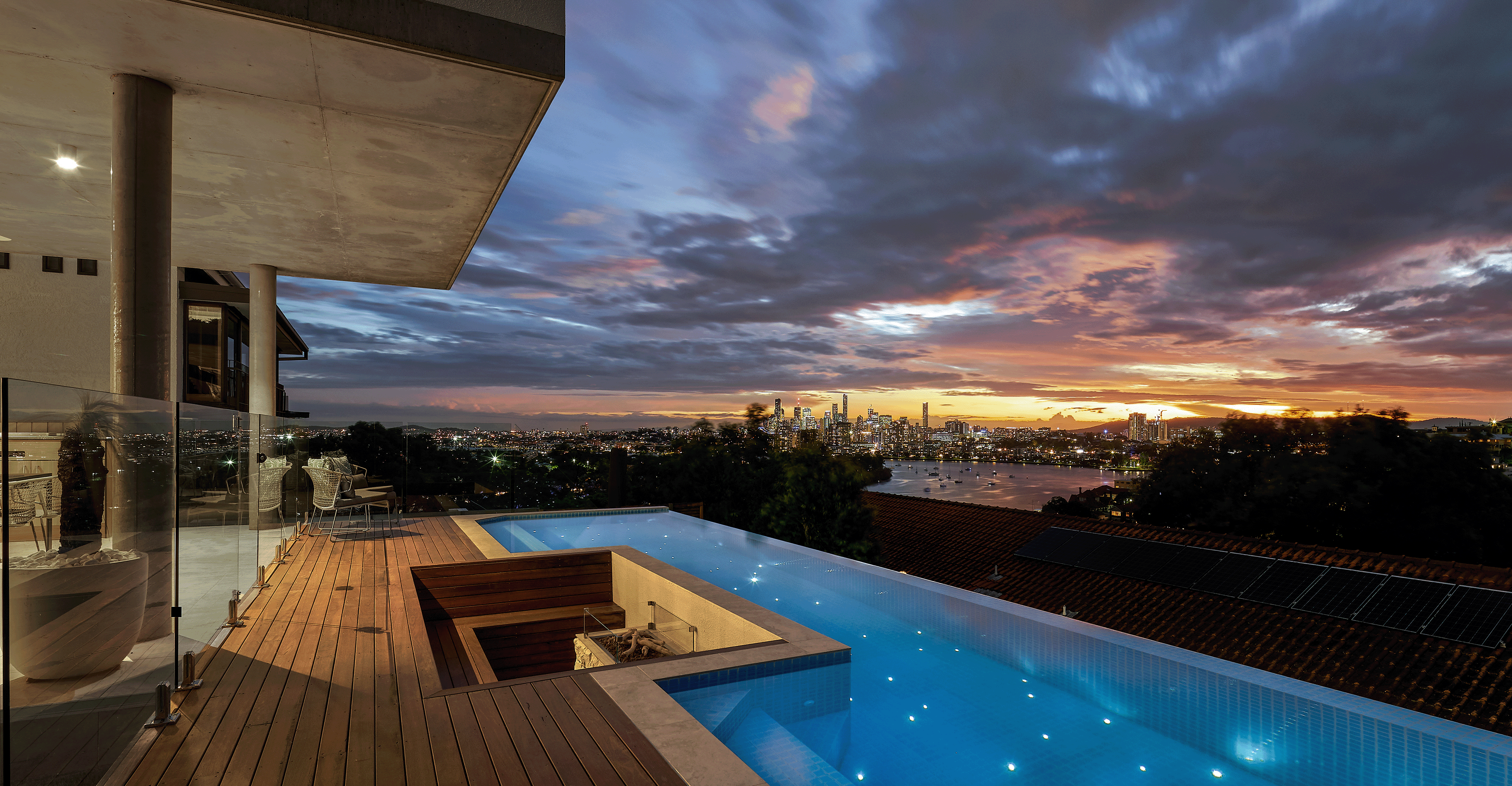
Pools and spas. Because fibre optic cable carries no electricity, it is the safest lighting option for underwater and wet area applications. Pool floors, walls, perimeters, and spa surrounds can all be illuminated with fibre optic cable connected to a remotely located illuminator.
Fibre optic star ceiling vs LED star ceiling
LED star ceiling products use small LED diodes embedded directly in the ceiling panel. While cheaper upfront, they have important differences:
| Feature | Fibre Optic | LED |
|---|---|---|
| Electricity at ceiling | No | Yes |
| Heat at ceiling | None | Minimal |
| Safe for wet areas | Yes (inherently) | Requires IP rating |
| Star point realism | High (true point source) | Moderate (visible diode) |
| Acoustic integration | Available (StarEFX) | Limited |
| Lifespan | 50,000+ hours | 30,000-50,000 hours |
For applications where safety, realism, acoustic performance, or wet area compliance matter, fibre optic is the superior technology. For budget-conscious decorative applications where safety is not a primary concern, LED alternatives may be sufficient.
How much does a fibre optic star ceiling cost?
Cost depends on the approach:
Pre-made acoustic star panels (like StarEFX PULSE or MATRIX) are the most cost-effective for new builds and renovations. Each panel drops into a standard suspended ceiling grid or fixes directly to drywall. No custom fibre threading required. Panels include factory-terminated fibre points, a controller, and a power supply. Use the StarEFX modular calculator to estimate quantities for your room size.
Custom plasterboard installations involve threading individual fibre strands through a plasterboard ceiling. This is more labour-intensive and typically more expensive per square metre, but allows for completely custom star density and placement. It is best suited for irregular ceiling shapes or where a flush plaster finish is required.
For a detailed cost estimate, contact our team with your room dimensions and application type.
Getting started
If you are considering a fibre optic star ceiling for your project, start by exploring the product range:
- StarEFX PULSE — Acoustic star ceiling panel with 40 fibre points and Wi-Fi control
- StarEFX MATRIX — High-density fibre optic feature panel with 56 points
- Fibre optic cables — End-emitting and side-emitting cable for custom installations
- Illuminators — LED light engines from 3W to 130W DMX
- The Human Centric Ecosystem — See how star ceilings integrate with LED, downlights, and perimeter lighting
Or contact our team to discuss your project. We provide specification support, layout planning, and installation guidance for every project type.